1 Operations System in Practice
The goal of this lab is to give you some hands-on experience with an operations system, the type of system that we will be focussing on simulating. Hopefully this will give you some idea of what is needed to simulate a system in terms of:
- the components of the system and how they interact with each other (entities and their behaviour);
- the type and amount of information/data that is needed, both for activity durations and control policies;
- the types of experiments that can be performed and how the system can be redesigned.
1.1 Making Paper Cars
The system that we will use as an example is making a car out of paper. You will each be given a piece of paper with the net of paper car on it as in Figure 1.1.
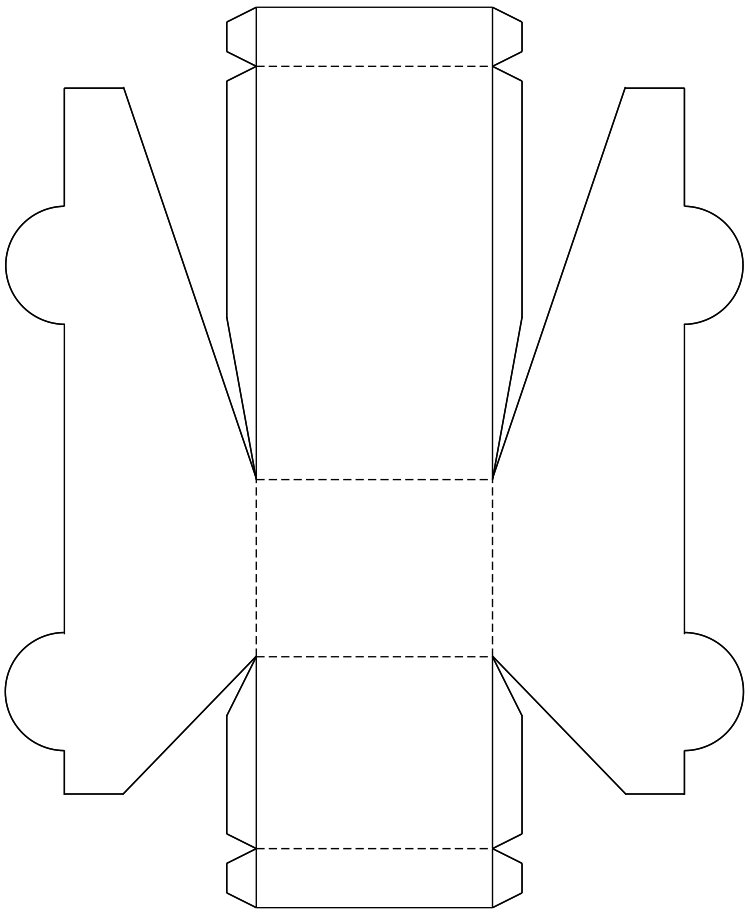
You will also get a pair of scissors, some tape, and blank pieces of paper. To make the car:
- Trace the net onto a new piece of paper.
- Cut the new net out.
- Fold the paper and tape the edges shut placing the tabs on the inside.
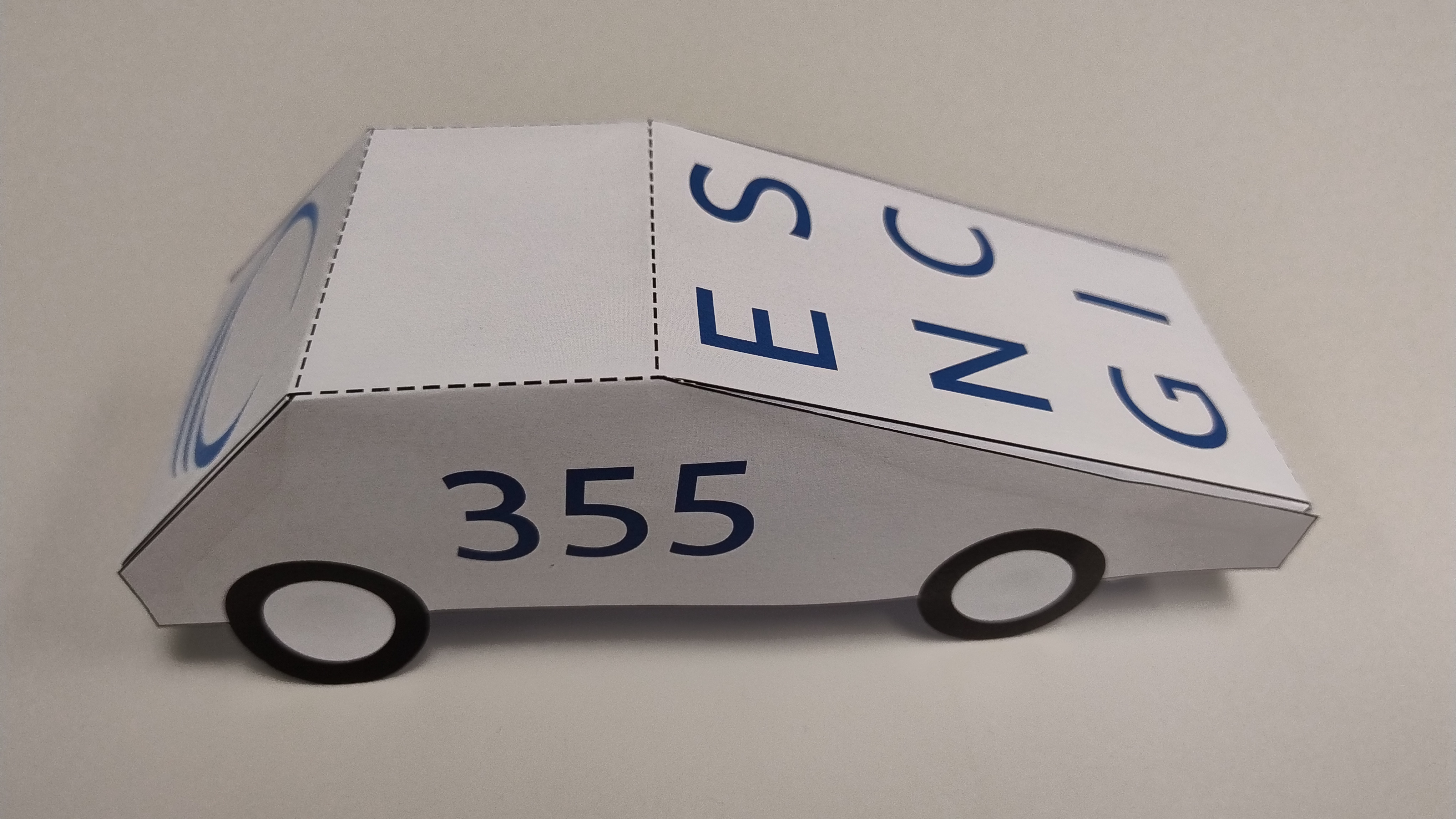
Figure 1.2 shows an example of a completed car.
First everyone should make one car by themselves. Once you have, show one of the instructors to get signed off. Then, discuss with you group how you can work together to make paper cars. You might want to experiment with different setups/policies and try making a few cars to see how long it takes and gather some data.
There will be a competition to see which group can make the most cars in 10 minutes. Before the time starts each group must submit an estimate of how many cars they believe they will be able to make. The score for each group will then be comprised of the following elements:
- 1 point for each car completed up to and including the estimated number.
- 0.25 points for each car completed above the estimated number.
- -0.75 points for each car not completed in the estimated number.
Additionally, the following rules must be followed:
- Each car must be traced and cut individually.
- Cars must be the same shape as the original template, including tabs.
- You can have as many stencils as you like.
- All final cars must have started as a blank, unfolded piece of paper.
- You may not have any pre-cut tape or nets.
- All cars must have been made only by members of your group.
- All cars must be folded and taped neatly to count. The lecturer has final say on whether a car meets the required neatness.
1.2 Reflections
Now that you have attempted to make as many cars as you can you may wish to reflect on the process by asking yourself the following questions:
- Did your group have any traced/cut out cars left at the end?
- What was the bottleneck/slowest part of the system?
- Did you collect any data/do any experiments? If so, did they help? Would you do more/different ones now?
- What would you do differently next time?